
The Trump Trap Is Real: 5 Dangerous Reasons the US Economy Is Heading for a Painful Slowdown
By Felixsr · Economics · 9 min read
The Trump Trap isn’t just a political talking point — it’s a dangerous economic cycle the US has fallen into before, and is falling into again. Tariffs designed to pressure China accelerated Beijing’s de-dollarization push. Oil facility strikes sent energy costs to a new structural floor. And now, falling CPI numbers are being mistaken for good news when they actually signal collapsing demand. Here’s what KB Wealth Management’s chief economist says is really happening — and what it means for your money.
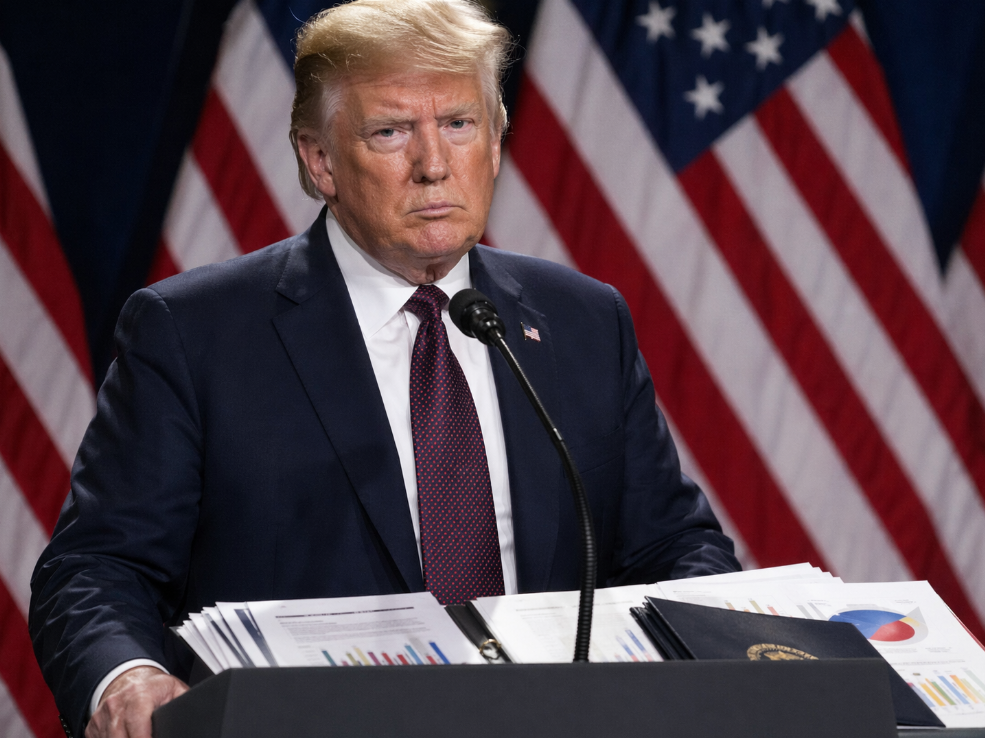
How America Always “Solves” Its Crises — And Why the Trump Trap Keeps Repeating
To understand the Trump Trap, you first need to understand America’s core economic playbook. Every major crisis — domestic or geopolitical — has been used as justification to inject massive liquidity into the financial system. The formula: encounter a crisis, build bipartisan emergency consensus, then flood markets with money.
This approach reliably produces short-term stock market euphoria. But each cycle requires a bigger injection than the last — and the underlying structural problems are never truly resolved. The market gets addicted to the stimulus, not the growth.
The Trump Trap Explained: 5 Ways US Policy Badly Backfired
| # | The Intended Trap | What Actually Happened |
|---|---|---|
| 1 | Tariffs would weaken China | China deepened ties with Russia & Iran, expanded yuan-based trade settlements |
| 2 | Pressure would revive US manufacturing | US capex fell, domestic consumption contracted — manufacturing entered a downturn |
| 3 | Isolating China would preserve dollar dominance | Gave China and allies a powerful narrative to justify de-dollarization globally |
| 4 | Middle East strategy would secure cheap oil | Refinery strikes created 3–6M bbl/day shortfall — $80–90 oil is now the structural floor |
| 5 | Unpredictable signals kept rivals off balance | Erratic policy destroyed US negotiating credibility — rivals stopped taking threats seriously |
“The fundamental error was sequencing. The US should have neutralized China’s ability to support Iran before applying Middle East pressure. But today’s China is far larger than during Trump’s first term — it cannot be controlled the same way.”
$80–90 Oil Is the Dangerous New Normal — The Cascade Nobody Is Talking About
Strikes on Saudi, Qatari, and UAE refinery infrastructure created a supply disruption of 3 to 6 million barrels per day — roughly 20% of global export volume. Physical infrastructure cannot be repaired quickly. Conservative estimates put recovery at 6 months minimum. This means $80–90 oil is not a spike — it’s the new floor.
| Sector | Impact of $80–90 Oil | Lag Time |
|---|---|---|
| Energy / Refining | Direct cost — already priced in | Immediate |
| Petrochemicals | PE resin, coating, polymer price hikes | 1–2 months |
| Automotive / Electronics | Wire, casing, component cost increases | 2–3 months |
| Construction / Infrastructure | Insulation, piping, adhesive cost increases | 3–6 months |
Why Low CPI Is a Danger Signal — Not the Good News Markets Think

The most dangerous misreading right now: falling CPI and PPI numbers are being celebrated as cooling inflation. They are not. The numbers are falling because demand has collapsed — not because prices have stabilized.
“US consumers look wealthy on paper — nominal incomes are high. But subtract taxes, insurance premiums, and rent, and there is simply nothing left to spend. These consumers are exhausted. We are clearly entering a transition from 3% growth into a 1–2% range. That is not a soft landing — that’s a stall.”
What Comes Next: Liquidity Injection and What Smart Investors Should Do Now
If the US economy stalls at 1–2% growth — with rising input costs, exhausted consumers, and no easy geopolitical exit — history says the policy response is predictable: print money and inject liquidity. This is not speculation. It’s the pattern that has repeated across every major US economic stress point for the past 25 years.
The Trump Trap: 3 Scenarios for the Next 12 Months
Bottom line: In all three scenarios, holding only domestic cash or bonds is the weakest position. Global diversification across geographies, asset classes, and currencies is the only reliable hedge against the Trump Trap cycle.
5 Key Takeaways: What the Trump Trap Means for Your Money
- The Trump Trap is self-reinforcing: Pressure on China accelerated de-dollarization. Pressure on the Middle East raised energy costs. The harder the push, the bigger the blowback.
- $80–90 oil is structural, not temporary: Refinery damage takes 6+ months to repair. Cost pressure is already flowing through petrochemicals into every major industry.
- Low CPI is a warning sign: Falling inflation data masks demand collapse. US consumers have no real disposable income left. Growth is decelerating toward 1–2%.
- Liquidity injection is the most likely response: This is the US government’s default move — and it will likely produce another asset price level-up.
- Global diversification is your best defense: In every scenario — reflation, stagflation, or escalation — investors holding only domestic assets face the most risk.
Sources & Further Reading
- KB Wealth Management — Yoo Shin-ik Chief Economist full analysis ↗
- Bloomberg — US-China trade war and de-dollarization trends ↗
- Reuters — Middle East oil facility damage and supply outlook ↗
- Financial Times — US consumer spending and disposable income analysis ↗
- Wall Street Journal — CPI misreading and demand collapse warning ↗
- IMF — Global growth outlook and energy price scenarios 2026 ↗
⚠️ Disclaimer: This post is for informational purposes only and does not constitute financial or investment advice. All analysis is based on publicly available sources and expert commentary. Always conduct your own research before making investment decisions.