3 Genius Pendulum Step Boxing Drills for Smooth Footwork
By Felixsr · Life Hacks · 9 min read
Pendulum step boxing looks smooth because the feet, eyes, hands, and rhythm are working as one system. When you combine the Soviet-style in-and-out pendulum step with a boxing reflex ball, you build distance control, timing, hand-eye coordination, and relaxed movement at the same time. This guide breaks the training down into simple steps you can practice at home.
Pendulum Step Boxing: Why Smooth Fighters Look So Relaxed
The first thing to understand about pendulum step boxing is that it is not random bouncing. It is controlled rhythm. The body moves forward and backward like a pendulum, but the goal is not to jump high. The goal is to enter range, leave range, and return again without becoming stiff.
In Soviet-style boxing circles, this movement is often described as “chelnok,” a shuttle-like in-and-out rhythm. The tactical value is simple: if you are always slightly moving, your opponent has a harder time reading your distance. You can draw a punch, slide back, and return with a counter before the opponent fully resets.
The movement should come from the feet, ankles, calves, hips, and posture working together. Beginners often make the mistake of bouncing vertically. That wastes energy. Better fighters keep the rhythm low and horizontal. They glide in and out without losing balance.
“Good pendulum movement is quiet. The fighter looks relaxed because the feet are doing the work before the upper body gets tense.”
Pendulum Step Boxing Meets Reflex Ball Training
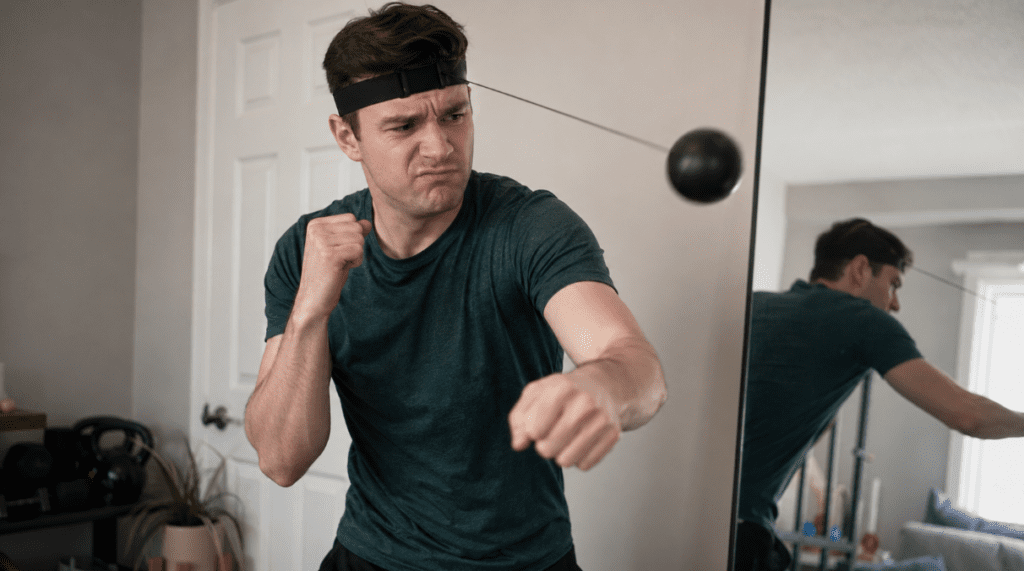
A reflex ball is a simple tool: a small ball attached to an elastic cord and headband. But it forces the brain to solve a difficult problem very quickly. The ball comes back at unpredictable angles, so your eyes, hands, balance, and timing have to cooperate.
The biggest benefit is hand-eye coordination. You learn to see the ball, predict its return, and touch it with just enough force to keep the rhythm alive. Beginners usually hit too hard. That makes the ball swing wildly and breaks the drill. Advanced users stay calm and tap the ball lightly.
When you combine reflex ball work with pendulum step boxing, the drill becomes a full-body timing exercise. Your feet create the rhythm, your eyes track the ball, your hands touch and recover, and your posture stays balanced.
| Training Focus | What It Builds | Beginner Goal |
|---|---|---|
| Reflex ball taps | Hand-eye coordination | 10 clean taps |
| Light punches | Timing and touch control | 20 clean taps |
| Step + tap rhythm | Foot-eye-hand coordination | 30 seconds without panic |
“The reflex ball is not about power. It is about attention, timing, and emotional control. If the athlete gets tense, the ball immediately exposes it.”
3 Genius Pendulum Step Boxing Drills for Beginners
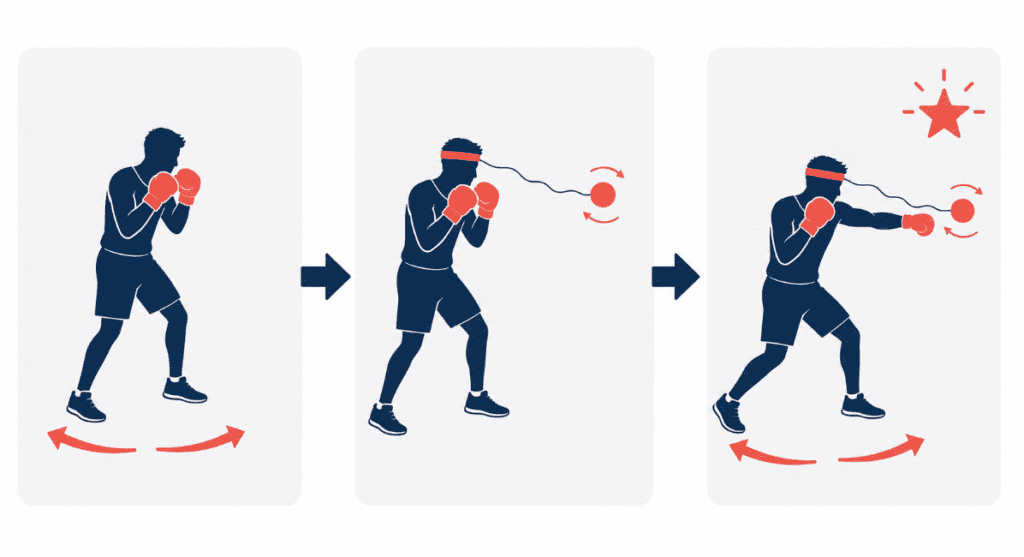
Do not combine everything on day one. The fastest way to learn pendulum step boxing is to separate the skills first, then blend them later. Use short rounds, stay relaxed, and stop before your technique collapses.
| Drill | How to Do It | Goal |
|---|---|---|
| Drill 1 | No ball. Just pendulum step for 60 seconds. | Smooth rhythm |
| Drill 2 | No step. Tap the reflex ball lightly. | Clean contact |
| Drill 3 | Step forward, tap. Step back, reset. | Foot-hand timing |
In Drill 1, keep your weight balanced and land through the ball of the foot. Do not lock your knees. In Drill 2, tap the ball downward or forward gently. In Drill 3, let your feet and hands share one rhythm: step in, touch the ball, step out, recover.
Best BPM Music for Pendulum Step Boxing Practice
Music helps because pendulum step boxing is a rhythm skill. For beginners, the best range is usually 120–130 BPM. This is fast enough to create movement but not so fast that the athlete starts rushing.
| BPM Range | Best Use | Playlist Search Idea |
|---|---|---|
| 100–120 BPM | Warm-up and mobility | boxing warm up 110 bpm |
| 120–130 BPM | Pendulum step and reflex ball rhythm | boxing footwork 125 bpm |
| 130–150 BPM | Bag work and faster combinations | boxing training 140 bpm |
Pendulum Step Boxing Safety: Avoid These Beginner Mistakes
The biggest safety mistake is doing too much too soon. A reflex ball can hit your face, your feet can tangle, and your calves can get sore quickly if you bounce too hard. Keep the first sessions short and controlled.
If you are new to boxing training, practice in an open space with no furniture nearby. Wear comfortable shoes, keep your knees soft, and stop if you feel sharp pain. This is coordination training, not a toughness contest.
“The beginner goal is not looking impressive. The goal is staying balanced while the brain processes rhythm, distance, and timing.”
Recommended Gear for Pendulum Step Boxing at Home
You do not need expensive equipment to begin. For this style of home training, the most useful setup is a beginner-friendly reflex ball, a speed rope, a simple interval timer, and a small open space. Add shoes only if your floor is slippery or your ankles need more support.
Best for learning hand-eye coordination without needing a heavy bag.
Buy on Amazon
Best for building calf endurance, rhythm, and light footwork before pendulum drills.
Buy on Amazon
Best for structured 1-minute and 2-minute rounds without checking your phone constantly.
Buy on Amazon
Optional, but helpful if you train on a slick floor or want better ankle support.
Buy on Amazon
Price and rating ranges are general shopping estimates. Replace each placeholder with your own Amazon Associates affiliate link before publishing.
Pendulum Step Boxing: Rhythm First, Speed Later
The secret of pendulum step boxing is not moving faster. It is moving with less tension. Smooth fighters look effortless because their rhythm is already built into the feet before the punch begins.
Bottom line: Ten focused minutes per day is enough to build real coordination. After 3–4 weeks, the movement usually starts to feel smoother. After 8 weeks, many beginners begin to look noticeably more relaxed.
- Coach Anthony — Chelnok and Soviet-style pendulum step basics ↗
- Oracle Boxing — Soviet style pendulum step explained ↗
- Beast Gear — Why train with a boxing reflex ball ↗
- Hungry4Fitness — Boxing reflex ball benefits and how-to ↗
- Boxing Trainer London — Boxing music BPM workout guide ↗
- Expert Boxing — Footwork tips and ball-of-foot movement ↗
⚠️ Disclaimer: This post is for general fitness and boxing skill information only. Train in a safe space, keep movements controlled, and consult a qualified coach or medical professional if you have injuries, balance issues, or health concerns. Affiliate links may generate a commission at no extra cost to you.