3 Essential Compost Fertilizer Oil Cake Tips for Healthier Plants
By Felixsr · Life Hacks · 7 min read
Compost fertilizer oil cake basics are essential for anyone who wants healthier garden soil, stronger plant growth, and better timing. Compost improves soil structure, fertilizer gives plants faster nutrients, and oil cake provides slower organic feeding. Once you understand how each one works, garden care becomes much easier and far less confusing.
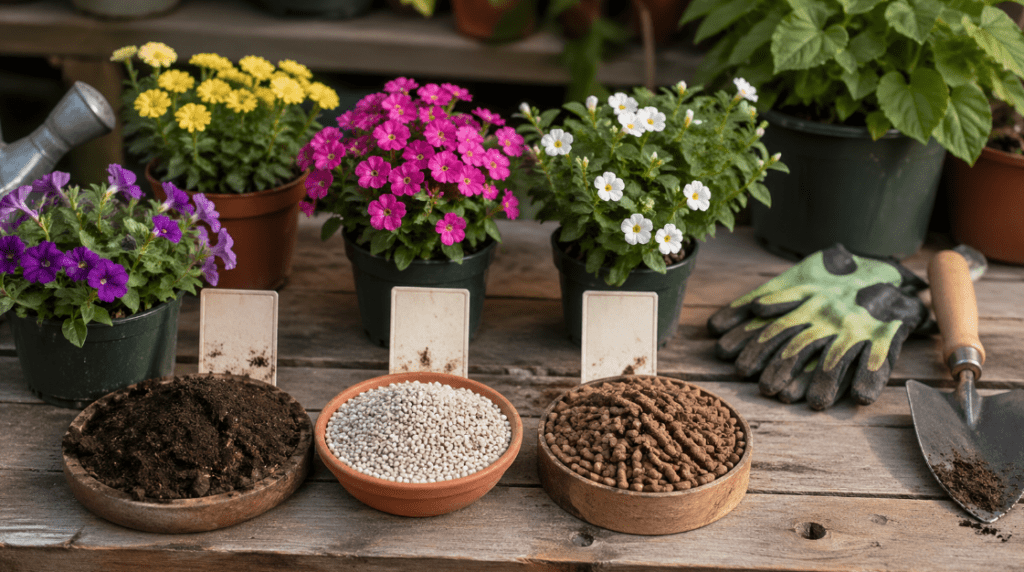
Compost Fertilizer Oil Cake Guide: Compost Is for Soil Improvement
In any compost fertilizer oil cake plan, compost should be treated as the soil builder. Its main purpose is not to give plants an immediate nutrient boost, but to improve the physical and biological condition of the soil. Compost helps heavy soil become looser, supports better water retention, and creates a better environment for roots and soil organisms.
Gardeners often expect compost to work like fertilizer, but that is the wrong expectation. Compost contains organic matter that must be broken down by soil microbes before nutrients become more available to plants. That process takes time, which is why compost is better used as a long-term soil improvement tool.
A practical timing strategy is to apply compost once a year, ideally in late fall or early winter. This gives the soil several months to settle, mature, and prepare for spring growth. For flower beds, shrubs, and home gardens, this slow preparation can make the next growing season much easier to manage.
“Compost is not a quick energy drink for plants. It is closer to long-term soil conditioning. The better the soil structure, the more stable the root environment becomes.”
Compost Fertilizer Oil Cake Timing: Fertilizer Feeds Fast Growth
The second part of a good compost fertilizer oil cake strategy is fertilizer. Unlike compost, fertilizer is designed to supply nutrients more directly during active plant growth. The three most familiar nutrients are nitrogen, phosphorus, and potassium, often shown as N-P-K on fertilizer labels.
Nitrogen supports leafy growth, phosphorus is often associated with roots and flowering, and potassium supports overall plant strength. Fertilizer is most useful during the active growing season, especially in spring when plants are producing new leaves, stems, buds, and flowers.
The biggest risk is overuse. Too much fertilizer can stress plants, damage roots, reduce soil life, and push the wrong kind of growth. Too much nitrogen, for example, may create lush leaves but reduce flowering or fruiting. This is why fertilizer timing matters as much as fertilizer type.
| Nutrient | Main Role | Common Mistake |
|---|---|---|
| Nitrogen | Leaves and stems | Too many leaves, fewer flowers |
| Phosphorus | Roots, buds, flowering | Adding without checking need |
| Potassium | Vigor and stress tolerance | Ignoring balance |
“Fertilizer should match the plant’s growth stage. Fast nutrients can help during active growth, but excess fertilizer often creates more problems than benefits.”
Compost Fertilizer Oil Cake System: Oil Cake Feeds Slowly
The third part of the compost fertilizer oil cake system is oil cake, a slow organic feed made from the residue left after oil is extracted from seeds or nuts. In gardening, it is commonly used as an organic fertilizer that releases nutrients more slowly than many chemical fertilizers.
Oil cake sits somewhere between compost and fertilizer. It can support soil biology while also feeding plants over time. It is often rich in nitrogen, so it can be useful for trees, shrubs, roses, and long-season plants that need steady nutrition.
Because oil cake depends on microbial breakdown, it is better applied a few weeks before planting rather than directly against tender roots. If placed too close to roots or stems, concentrated organic material may create stress as it decomposes.
“Oil cake is useful because it feeds slowly, but slow does not mean careless. It should be applied with space, timing, and root safety in mind.”
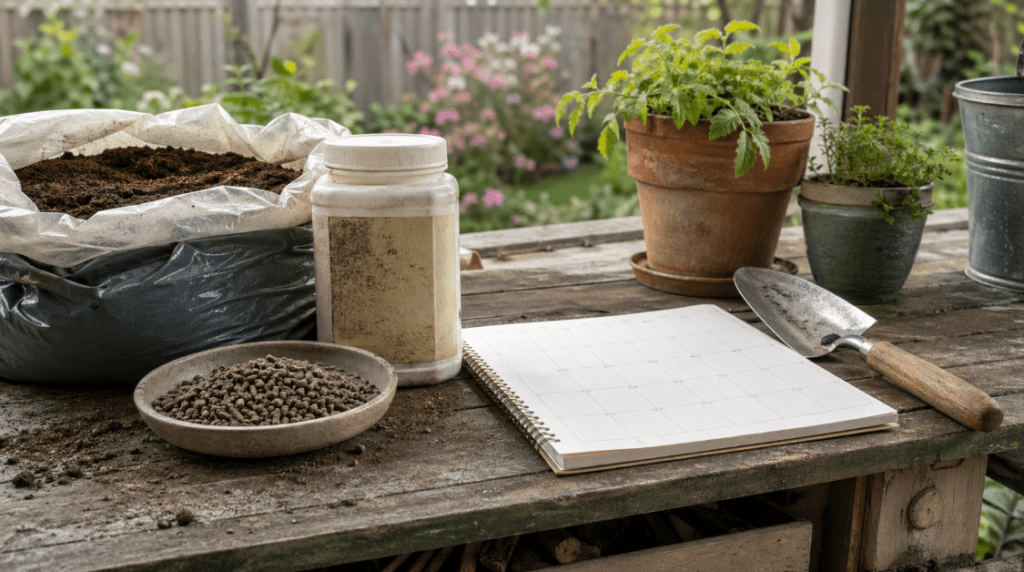
Compost Fertilizer Oil Cake: Soil First, Growth Second, Slow Feed Third
A smart compost fertilizer oil cake routine works because each product has a different job. Compost improves soil, fertilizer pushes active growth, and oil cake feeds slowly. Most gardening mistakes happen when these three are used as if they were the same product.
Bottom line: A balanced compost fertilizer oil cake routine can make garden care easier: compost changes the soil, fertilizer pushes active growth, and oil cake feeds slowly. Use the right one at the right time and your garden becomes much easier to manage.
- Michigan State University Extension — Compost and soil water holding capacity ↗
- Oregon State University Extension — Improving garden soils with organic matter ↗
- University of Minnesota Extension — Quick guide to fertilizing plants ↗
- Oregon State University Extension — Fertilizing your garden ↗
- West Virginia University Extension — Basics of garden fertilization ↗
- Horticultural Science and Technology — Compost and mixed oilseed cake study ↗
⚠️ Disclaimer: This post is for general gardening information only. Soil type, climate, plant species, and product formulas vary widely. Always follow the product label and consider a soil test before applying fertilizer or organic amendments.