🥦 Health & Nutrition
Stop Your Glucose Spikes:
The Science-Backed “Veggie-First” Eating Rule
One simple change to the order you eat your food — backed by real clinical studies — can dramatically reduce blood sugar spikes.
What if you could reduce your blood sugar spikes by over 40% — without changing what you eat, only when you eat it? Sounds too good to be true, but multiple peer-reviewed clinical studies say it’s real.
The strategy is called food sequencing — and the core rule is simple: eat your vegetables first, protein second, and carbohydrates last. Here’s everything you need to know about why it works, what the science says, and how to start today.
🩸 What Is a Glucose Spike — and Why Does It Matter?
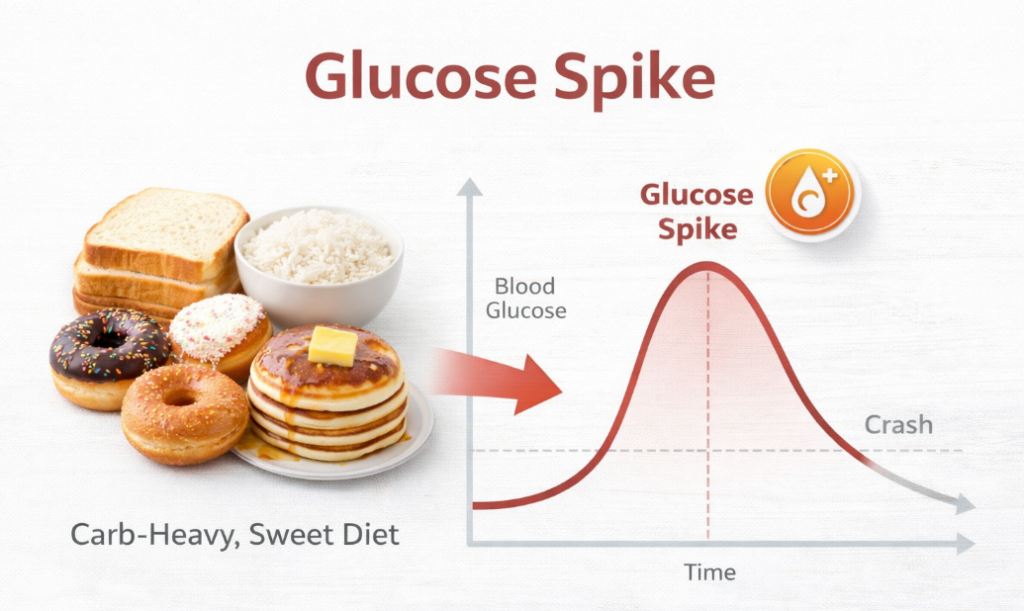
A glucose spike happens about 30–60 minutes after you eat carbohydrates. Your blood sugar rises sharply, your body pumps out insulin to bring it back down, and then you often feel an energy crash — that familiar afternoon slump after lunch.
For most healthy people, occasional glucose spikes aren’t dangerous. But over time, frequent, high spikes are linked to:
- ⚠️ Increased risk of Type 2 diabetes
- ⚠️ Chronic inflammation
- ⚠️ Weight gain and difficulty losing weight
- ⚠️ Energy crashes and brain fog
- ⚠️ Hormonal disruptions
💡 Key Fact: Approximately 37% of adults in the United States over age 20 have prediabetes — many without knowing it. Food sequencing is one of the simplest, most accessible strategies to manage this risk.
Source: PMC / National Institutes of Health
🥦 What Is the “Veggie-First” Rule?
The Veggie-First rule — also called food sequencing or nutrient ordering — is a meal strategy where you eat your food in a specific order:
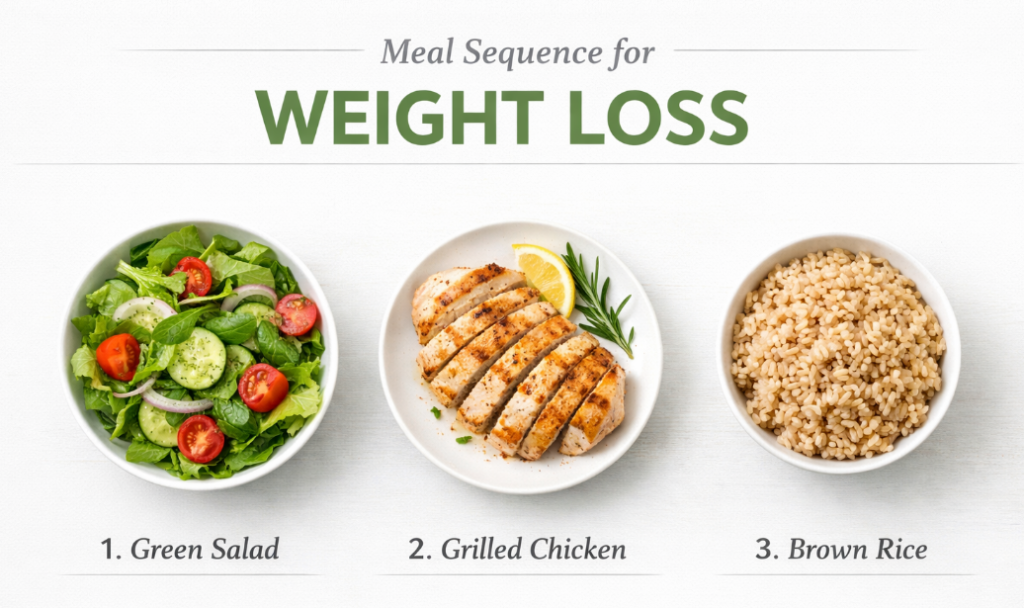
- 🥗 Vegetables first (fiber-rich foods like broccoli, spinach, salad)
- 🍗 Protein second (chicken, fish, eggs, tofu)
- 🍚 Carbohydrates last (rice, bread, pasta, potatoes)
The food on your plate stays exactly the same. The only thing that changes is the order in which you eat it — and the impact on your blood sugar is remarkable.
🔬 What Does the Science Actually Say?
Study #1: Cornell University — Prediabetes Research
One of the most cited studies on food sequencing was conducted on participants with prediabetes. Researchers tested three different meal orders using the same foods:
- Carbohydrates first, then protein and vegetables
- Protein and vegetables first, then carbohydrates
- Vegetables first, then protein and carbohydrates
📊 Result: Eating vegetables and protein before carbohydrates reduced postprandial glucose peaks by over 40% compared to eating carbohydrates first.
Source: PMC / National Institutes of Health — Impact of Food Order on Postprandial Glycemic Excursions in Prediabetes
Study #2: UAE Clinical Trial — Healthy Adults
A 2024 randomized controlled trial published in Diabetes, Metabolic Syndrome and Obesity tested the veggie-and-protein-first strategy on healthy adults in the UAE. The results were striking:
📊 Result: Eating vegetables and protein first reduced the overall 2-hour blood sugar response by 40.9%, and reduced insulin levels at 30 minutes by 60.8% compared to eating all components together.
Source: Shaheen et al., Diabetes, Metabolic Syndrome and Obesity (2024)
Study #3: Japanese Patients with Type 2 Diabetes
Research published in PMC examined Japanese patients with Type 2 diabetes who ate vegetables before carbohydrates. The food-order intervention produced a significant reduction in postprandial blood glucose — with measurable improvements in insulin sensitivity.
📊 Result: Blood glucose was reduced by 5.87% at 60 minutes and 6.06% at 120 minutes, while insulin levels dropped by up to 11.10% compared to the regular eating order.
Source: PMC — Effect of Eating Vegetables Before Carbohydrates
🧬 Why Does It Work? The Science Behind It
According to Ohio State University Health, the mechanism behind veggie-first eating comes down to how fiber and protein affect digestion speed.
- 🥦 Fiber forms a gel-like layer in your gut, slowing down digestion and glucose absorption
- 🍗 Protein stimulates GLP-1 — a hormone that slows gastric emptying and boosts insulin response
- 🍚 Carbs eaten last digest more slowly because fiber and protein have already “prepared” your digestive system
💡 Think of it like putting a sponge at the bottom of a funnel — the fiber slows down how fast sugar enters your bloodstream, preventing that sharp spike.
Source: Ohio State University Health & Discovery
📊 Results at a Glance
| Eating Order | Glucose Spike | Insulin Response | Energy Crash? |
|---|---|---|---|
| 🍚 Carbs First | ⬆️ High spike | ⬆️ High | ❌ Yes |
| 🥦 Veggies First | ⬇️ Reduced 40%+ | ⬇️ Much lower | ✅ Less likely |
| 🥗 Veggies + Protein First | ⬇️ Reduced 40%+ | ⬇️ 60% lower at 30min | ✅ Less likely |
🍽️ How to Apply It in Real Life
The good news? This strategy requires zero special foods, zero calorie counting, and zero cooking changes. Here’s how to make it work at every meal:
- Start with your salad or cooked vegetables — eat them completely before moving on
- Move to your protein — chicken, fish, eggs, beans, or tofu
- Finish with your carbs — rice, bread, pasta, or potatoes
- Wait at least 10 minutes between vegetables and carbs if possible
- Don’t stress about mixed dishes — a quinoa bowl is still fine. Apply the rule when you can
🎯 Pro Tip: You don’t need to do this at every single meal to see benefits. Even applying the veggie-first rule at 3–4 meals per week can meaningfully improve your average blood sugar levels over time.
Source: Ohio State University Health & Discovery
👥 Who Benefits the Most?
| Who | Why It Helps |
|---|---|
| 🩺 People with Type 2 diabetes | Directly reduces post-meal glucose levels |
| ⚠️ People with prediabetes | May prevent progression to full diabetes |
| ⚖️ People trying to lose weight | Fiber + protein first = feeling full sooner |
| 😴 People with energy crashes | Stable blood sugar = stable energy levels |
| 💪 Healthy people | Long-term prevention of metabolic issues |
💡 Final Thoughts
The Veggie-First rule is one of the most accessible, evidence-backed nutrition strategies available — and it costs absolutely nothing to try. You don’t need to buy special foods, follow a strict diet, or count calories. You simply change the order of what you’re already eating.
Multiple clinical studies confirm that this simple shift can reduce glucose spikes by 40% or more, lower insulin demand, support weight management, and help prevent long-term metabolic disease. Whether you have diabetes, prediabetes, or simply want to feel more energized throughout the day — start your next meal with vegetables.
🥦 Bottom Line: Same food. Same calories. Different order — dramatically better blood sugar control. Start tonight.
📚 Sources
- PMC / NIH — Impact of Food Order on Postprandial Glycemic Excursions in Prediabetes
- PMC / NIH — Effect of Eating Vegetables Before Carbohydrates in Type 2 Diabetes
- The Academic — Postprandial Glucose and Insulin Response to Meal Sequence (2024)
- Ohio State University Health & Discovery — Eating Veggies First, Carbs Last
- The Conversation — Food Sequencing and Glucose Levels (2026)